Items
-
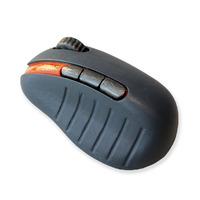 Wireless gaming mouse prototype Wireless gaming mouse prototype made by Jiapeng Zhuo, Chinese Competitor, Gold Medal in Industrial Deign Technology. WSC lyon 2024 The Test Prject included the design research, concept design, CAD modelling and 3D prirj¡ing, prototyping and design proposal of a wireless gaming mouse.
 -
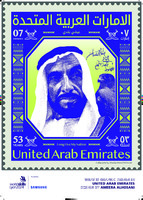 Set of Posters - Graphic Design Technology, WSC Lyon 2024 This collection consists of 31 posters, each representing a competitor in Graphic Design Technology at WSC Lyon 2024. The design of these posters was a pre-competition task for the Competitors, who presented them in Lyon as part of the Test Project. The workspace design included an exhibition of all the posters, and each Competitor’s working area featured their own poster for identification. Additionally, the designs were also reproduced as a set of postcards.
 -
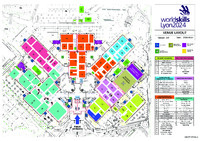 WorldSkills Competition Lyon 2024, venue layout WorldSkills Competition Lyon 2024, venue layout
 -
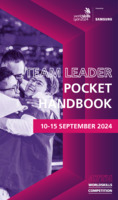 WorldSkills Competition Lyon 2024, Team Leader pocket handbook WorldSkills Competition Lyon 2024, Team Leader pocket handbook
 -
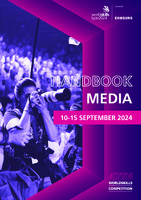 WorldSkills Competition Lyon 2024, Media Handbook WorldSkills Competition Lyon 2024, Media Handbook
 -
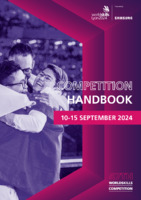 WorldSkills Competition Lyon 2024, Competition Handbook WorldSkills Competition Lyon 2024, Competition Handbook
 -
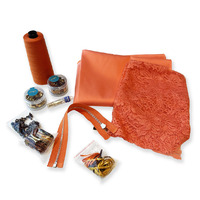 Fashion Technology TP, WSC Lyon 2024. Basic materials to develop the TP Fashion Technology TP, WSC Lyon 2024. Basic materials to be used to make the top and skirt.
 -
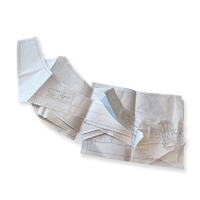 Fashion Technology TP, WSC Lyon 2024. Patterns Fashion Technology TP, WSC Lyon 2024. Patterns made by Taeseok Kang, Korean Competitor, Gold medal.
 -
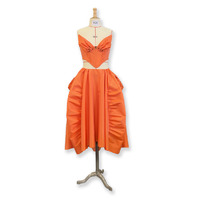 Fashion Technology TP, WSC Lyon 2024. “Couture” top and skirt. Fashion Technology TP, WSC Lyon 2024. “Couture” top and skirt made by Taeseok Kang, Korean Competitor, Gold medal.
 -
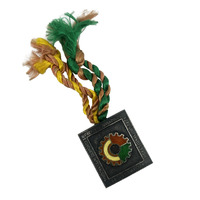 Medal or badge from the 1st International VET Competition, 1950 Square-shaped medal or badge with an intricate design and braided yellow, green, and a brownish-pink cords (maybe red originally). The medal itself is square-shaped with an emblem in the center depicting a gear with sections in yellow, green, and red. Surrounding the gear are the inscription: I CONCURSO INTERNACIONAL DE FORMACIÓN PROFESIONAL OBRERA FRENTE DE JUVENTUDES The overall design suggests it is an award or recognition related to the first International Competition, held in Madrid in 1950.
 -
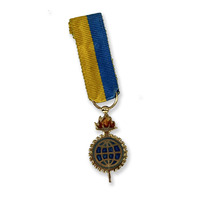 Lapel pin with the logo of the IVTO. Lapel pin with the logo of the IVTO and ribbon in yellow and blue.
 -
 Luis Sedano, a long career in Cristalería Española – Saint Gobain Luis Sedano began his career at Cristalería Española, a Saint Gobain subsidiary, after his family relocated to Avilés in search of better opportunities. Initially studying Technical Engineering, he switched to Industrial Mastery and joined the Apprentice School at Cristalería Española at 14. Excelling in his field, Luis represented his company in national competitions, winning the Champion title in Vigo in 1969 and subsequently competing in Japan in 1970. Despite a scoring controversy, he earned a Bronze medal in the International Vocational Training Competition. Luis's achievements in Japan were a source of pride, and he cherished the experience throughout his life. His family retains his medals, competition piece, and related memorabilia. Luis dedicated his entire career to Cristalería Española until retiring in 2008 due to illness, and passed away in 2011, remembered for his craftsmanship and mechanical skills.
 -
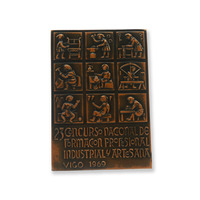 Medal won by Luis Sedano at the Spanish national competition 1969, Skill of Fitting. Medal won by Luis Sedano at the Spanish national competition 1969, Skill of Fitting.
 -
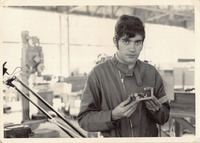 19th International Vocational Training Competition, Tokyo 1970. Luis Sedano with the piece he made during the Competition. 19th International Vocational Training Competition, Tokyo 1970. Luis Sedano with the piece he made during the Competition.
 -
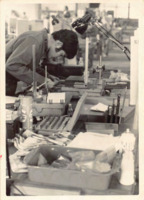 19th International Vocational Training Competition, Tokyo 1970. Fitting workshop, Luis Sedano working during the Competition. 19th International Vocational Training Competition, Tokyo 1970. Fitting workshop, Luis Sedano working during the Competition (5 photos)
 -
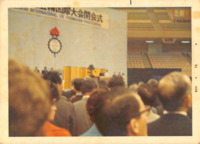 19th International Vocational Training Competition, Tokyo 1970. Photos of a ceremony. 19th International Vocational Training Competition, Tokyo 1970. 3 photos of a ceremony.
 -
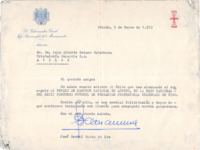 Letter from José Manual Mateo de Roa to Luis Sedano, 09/01/1970 Letter from José Manual Mateo de Roa to Luis Sedano, 09/01/1970 Subject: Congratulations
 -
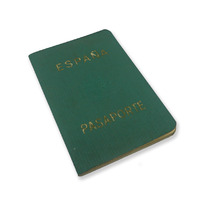 Luis Sedano’s passport Luis Sedano’s passport with the stamp of entry and exit from Japan, for the 19th International Vocational Training Competition, Tokio 1970
 -
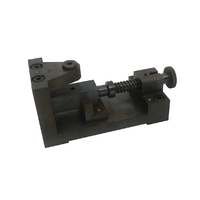 Fitting Test Project outcome, 1970 Fitting Test Project outcome, made by Luis Sedano on the 19th International Vocational Training Competition, Tokyo 1970.
 -
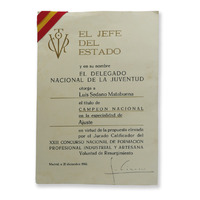 Certificate awarded to Luis Sedano as Spanish national Champion in Fitting, 1969 Certificate awarded to Luis Sedano as Spanish national Champion in Fitting. 1969
 -
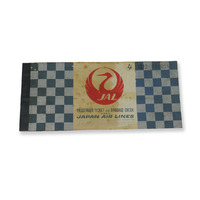 Flight ticket Amsterdam-Tokyo Flight ticket Amsterdam-Tokio, issued to Luis Sedano to attend the 19th International Vocational Training Competition, Tokio 1970