Items
-
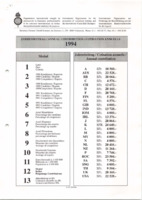 IVTO Members annual fee 1994 IVTO Members annual fee 1994 (in CHF)
-
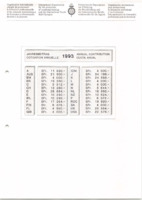 IVTO Members annual fee 1993 IVTO Members annual fee 1993 (in CHF)
-
 Closing Speech by the President of ROC, 32nd International Vocational Training Competition, Taipei 1993 Closing Speech by the President of ROC, 32nd International Vocational Training Competition, Taipei 1993
-
 Closing Speech by the Prime Minister of the Republic of China, 32nd International Vocational Training Competition, Taipei 1993 Closing Speech by the Prime Minister of the Republic of China, 32nd International Vocational Training Competition, Taipei 1993
-
 Closing Speech by the President of IVTO, 32nd International Vocational Training Competition, Taipei 1993 Closing Speech by the President of IVTO, 32nd International Vocational Training Competition, Taipei 1993
-
 Opening Speech by the President of IVTO, 32nd International Vocational Training Competition, Taipei 1993 Opening Speech by the President of IVTO, 32nd International Vocational Training Competition, Taipei 1993
-
 Opening Speech by the President of ROC, 32nd International Vocational Training Competition, Taipei 1993 Opening Speech by the President of ROC, 32nd International Vocational Training Competition, Taipei 1993
-
 Congratulatory Message by Dr.Lee, Teng-Hui President The Republic of China, 32nd IVTC, Taipei 1993 Congratulatory Message by Dr.Lee, Teng-Hui President The Republic of China, 32nd IVTC, Taipei 1993
-
 Letter from Daniel Sommer to G. Bertelsmann-Braskamp 11/08/1993 Letter from Daniel Sommer to G. Bertelsmann-Braskamp 11/08/1993 Subject: Condolences on the death of Henri Bertelsmann
-
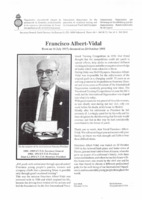 Obituary of Francisco Albert Vidal Obituary by Cees Beuk (President) and Daniel Sommer (General Secretariat), marking the death of Francisco Albert Vidal in 1993, including original in English and translation into Spanish
-
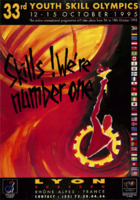 33rd International Vocational Training Competition, Lyon1995 - Poster This striking poster promoted the 1995 international competition held in Lyon, France. The poster is mostly red, yellow and black, and the graffiti-style letters state 'Skills! We're number one.' A figure carrying a flame emerges from a gear tooth. On the right hand side is a column of flags of countries that took part.
-
 Trophies and Medals, an evolution Since its creation in 1950, International VET Competitions have not only showcased exceptional vocational skills but also featured a diversity of aesthetics and cultural influences of each hosting country. In the early years, winners were awarded trophies. However, since 1959, medals have been preferred, evolving from simple designs to intricate pieces that embody the essence of skill excellence. From the sleek designs of the mid-20th century, more related with craftmanship symbols to the culturally inspired motifs of recent years, these awards serve as tangible representations of innovation and cultural exchange. Each edition of the competition brings forth new designs, carefully curated to resonate with the host nation's heritage and contemporary design trends. This curated list explores how these medals and trophies have evolved, highlighting the artistic interpretations and symbolic meanings embedded in their design, which transcend mere recognition to embody the spirit of global skill excellence.
-
 The Fitting Champion in 1958: Andrés Martínez Jiménez-Balaguer Andrés Martínez Jiménez-Balaguer was born on April 21, 1941, in Cartagena. His father was a polisher at the Bazán Company. Andrés participated in the International VET Competition in Brussels in 1958, where he emerged as a champion in fitting. He kept a detailed diary of his journey, describing his experiences from departure to competition tasks and social activities. Andrés' account includes moments such as his arrival in Brussels, staying at the Emile Gryson Teaching and Research Centre, and visiting local sites like the port of Antwerp and the Estrella Artois breweries. His diary reflects the challenges and excitement of the competition, noting that the competition piece was familiar to him, having already tackled it in a national competition.
-
 The 12th International Apprentice Competition, 1963. Behind the Scenes In the lead-up to the international competitions at Bolton Street College in June and July 1963, Gabriel Daly played a pivotal role behind the scenes. Alongside colleagues Dermot Ward and Seamus Greene, he managed the Goods Store, where a vast array of tools, equipment, and materials were meticulously received, verified, and organized for distribution to competition sectors. Simultaneously, workshops were outfitted with specialized machinery and workspaces tailored for each competitor. The Drawing and Copying Centre, overseen by draughtsmen like Jim Roche and technician Michael Lynch, ensured the accurate reproduction of technical drawings required for the competition. Their efforts culminated in the successful hosting of the 12th International Apprentice Competition, highlighting Ireland's commitment to technical excellence and meticulous preparation on an international stage.
-
 Standard 500 - From the “memoirs” of Cees Beuk Cees Beuk, reflecting on his role as Superintendent of Vocational Education in 1983, recounts his introduction to the International Professional Competitions in Linz, Austria. Guided by René Gonthier and Arend Segaar, he was tasked with addressing the challenge of score variability among competition experts. Proposing a standardized 500-point scale with a 25-point standard deviation, Beuk aimed to ensure fairer comparisons and consistent evaluation across professions. Despite initial resistance, his method proved effective during trials at the IVTO Youth Skill Olympics in Osaka, 1985. However, internal conflicts within IVTO, leading to Gonthier's departure, threatened progress. With perseverance and support from IVTO officials like Francisco Albert and Erica Moser, Beuk overcame setbacks, successfully implementing the Standard 500 scale by Sydney, marking a significant milestone in competition scoring methodology.
-
 My memories of the 12th International Competition The 12th International Trade Competitions for Apprentices in Dublin, 1963, left an enduring imprint on Nicholas memory. From facilitating the arrival and accommodation of international teams at Gormanston College to managing daily logistics at Bolton Street, where the competitions took place, hs role was multifaceted and rewarding. One standout moment was easing the Japanese team's customs clearance with a crucial letter, which earned him honorary status among them. Organizing leisure activities like swimming sessions and sports alongside Mr. M.J. Doogan added a relaxed dimension to the intense competition atmosphere. The event underscored the spirit of collaboration among organizers and participants alike, culminating in a memorable and successful international gathering of apprentices.
-
 Michael Ó Flanagáin, biography Micheál Ó Flanagáin (1910-1977), a Dublin native, began his career after graduating with a degree in Mechanical and Electrical Engineering from University College Dublin in 1932. His professional journey led him through roles in London and with the Department of Posts and Telegraphs before joining the Department of Education's Technical Instruction Branch (TIB) in 1936. Rising to Senior Inspector in 1954 and later Chief Inspector in 1958, Micheál played a pivotal role in restructuring the Inspectorate of the Department of Education by 1968. Notably, he facilitated Ireland's entry into the International Vocational Training organization (IVTO) in 1956, where he served as a respected delegate for 17 years. His leadership was crucial during the 12th International Trade Competition for Apprentices held in Dublin in 1963. A polyglot with fluency in several European languages, he advocated for technician courses and educational reforms, contributing significantly to reports on Irish education and the establishment of the National College of Art and Design. Micheál's dedication to technical education extended to his chairmanship of the Irish-Swiss Institute of Horology and efforts to establish Regional Technical Colleges in the 1970s, marking a transformative era for Irish education under his stewardship as Chief Inspector.
-
 Memories of an Irish Competitor Paddy remembers that in 1963 he had the privilege of representing Ireland at the 12th International Trade Competitions for Apprentices held in Dublin. Alongside fellow apprentices from Córas Iompair Éireann (CIE), he underwent rigorous training at Bolton Street College and cultural coaching. Their days were filled with technical preparations and cultural activities, including practicing "THE CRAFTSMAN" song. Accommodated at Gormanston's Franciscan College, they enjoyed a spirited atmosphere. The competition commenced with a grand opening ceremony attended by dignitaries like Minister for Education. He approached the competition with nerves, but upon receiving the test drawing, he focused intensely, eventually earning a Silver medal in Sheet Metal Work. The journey concluded with a memorable sightseeing trip to Cork and Kerry, culminating in a proud moment at Dublin Castle where President Eamon de Valera awarded him his medal. Reflecting on this experience nearly fifty years later, the competition remains a cherished memory, defined by camaraderie and personal achievement.
-
 Joan Arsequell, Champion at the First International Competition in 1950 Joan Arsequell was born in 1930 and experienced a difficult childhood marked by war and famine. His father went into exile in France, and Joan, along with his siblings, had to work from a young age to support the family. He attended the Elizalde Apprentices School, where he learned a trade that provided financial support. Joan specialized in wood pattern making and participated in the first International Vocational Education and Training (VET) competition in 1950, winning the top prize. This achievement boosted his self-confidence and opened professional opportunities. He went on to establish successful companies, including Juquell, Arviplast, and later Escaure Ibèrica, S.A., which are still operated by his descendants. Joan emphasized the importance of vocational training and the need for young people to develop dedication and craftsmanship.
-
 Francisco Albert Vidal, brief biography Francisco Albert Vidal was born on July 14, 1917, in Pinoso, Spain. He was the eldest of three siblings. After primary school, he briefly attended a seminary in Orihuela but returned home to complete his baccalaureate and became the president of "Catholic Action" in Pinoso. His law studies at Alicante University were interrupted by the Spanish Civil War. Post-war, Francisco became heavily involved in the organization of international vocational education and training (VET) competitions, ultimately becoming the Secretary of the Organizer Committee. His dedication to VET and youth training was a lifelong passion, influencing many until his death on October 25, 1993. His achievements were later recognized by his hometown, Pinoso, which honored him as "Hijo Predilecto" .
-
 Fernando Mayer Garea, two in a row The report on Fernando Mayer Garea highlights his illustrious career as a silversmith and jeweler. Born in Santiago de Compostela, Spain, in 1942, he comes from a distinguished family in arts and crafts, with roots tracing back to German craftsmen in the 18th century. Fernando's grandfather, Enrique Mayer Castro, was a prominent figure in engraving and teaching. Fernando excelled early, winning several regional and national VET competitions in silversmithing, including an international competition in Madrid in 1957. He continued this success in Duisburg in 1961. Fernando established a jewelry shop in Santiago de Compostela, specializing in jet work, which his grandfather had revived. He is credited with innovating new designs in jet jewelry. His significant commissions include ecclesiastical pieces for the Cathedral of Santiago de Compostela and portraits for the Kings of Spain. The Mayer jewelry tradition continues with his family running the business.